
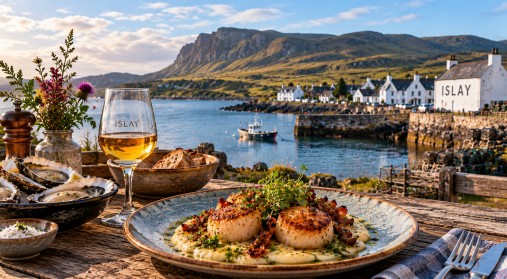
The Isle of Islay, renowned for its Scottish whisky, is expanding its appeal as a destination where culinary delights, agriculture, and outdoor activities play a significant role. While the whisky industry remains integral to the island’s economy, supporting jobs and local businesses, Islay is increasingly attracting visitors with its diverse offerings beyond the distilleries. This development has positively impacted local farmers, restaurants, breweries, and food producers who benefit from the growing influx of tourists.
One of Islay’s main culinary draws is its seafood, sourced abundantly from the surrounding waters. The island’s restaurants showcase local catches, prominently featuring langoustines, crab, scallops, oysters, and fresh fish on their menus, giving diners a genuine taste of the coastal environment. This focus on local produce extends to agriculture, where increased barley production on the island strengthens the vital connection between the landscape and its renowned whisky.
Adding to the island’s charm are small businesses that provide unique products, such as island-made beer from a local brewery and handcrafted chocolates that incorporate ingredients from the broader Scottish region. Some of these products are crafted to complement whisky, offering visitors novel experiences as they explore Islay’s food scene. The evolution of accommodation and dining options reflects this growth in tourism, ranging from laid-back seafood eateries to distinctive hotels with innovative menus centered around local ingredients.
Besides the culinary offerings, Islay’s picturesque scenery is a significant attraction. The island boasts a wealth of outdoor activities, including cycling routes, coastal walks, and stunning beaches with vistas of the surrounding islands. These natural experiences invite exploration and provide visitors with ample opportunities to enjoy the outdoors.
Ultimately, Islay’s greatest strength lies in how these various experiences seamlessly blend together. While whisky draws many to the island, it is the combination of seafood, landscapes, agriculture, and independent producers that encourages visitors to extend their stay and explore a different side of Scotland.