
The assassination of Ayatollah Ali Khamenei in a US-Israeli airstrike on February 28 created an immediate and unprecedented leadership crisis for the Islamic Republic of Iran. Within weeks, that crisis was resolved — at least formally — with the selection of his son Mojtaba as the new supreme leader. The Assembly of Experts announced the appointment on Sunday, framing it as a decisive choice that would preserve the revolution’s continuity in the face of foreign aggression.
Mojtaba Khamenei is 56 years old and was raised entirely within the political and religious world that emerged from the 1979 revolution. He studied theology in Qom and reportedly served in the Iran-Iraq war’s final stages before returning to shape political access within his father’s inner circle. His deep ties to the IRGC and conservative clergy gave him a power base that made him the most likely successor, though his lack of public experience was widely noted.
The appointment was endorsed immediately and uniformly by Iran’s institutional establishment. The IRGC, armed forces, parliament, and security figures all issued statements of support, and state media framed the transition as a moment of national strength rather than vulnerability. Senior official Ali Larijani explicitly noted Mojtaba’s capability to lead the country during what he called sensitive conditions. The Houthi rebels in Yemen offered enthusiastic external endorsement.
The shadow of his father’s death — and the manner of it — loomed over every aspect of the appointment. Mojtaba inherits a country that has just absorbed one of the most significant blows in its modern history: the targeted killing of its supreme leader. Israel continued to strike Iranian targets on Monday, and Iran was simultaneously attacking Gulf states. The IRGC threatened oil prices above $200 per barrel. Trump warned the new leader’s tenure might be short.
Mojtaba Khamenei leads an Iran that is grieving, at war, and under pressure on every front. His father’s assassination was meant to destabilize the regime; whether his appointment stabilizes it or exposes new vulnerabilities will be one of the most consequential questions of the coming months. For now, the Islamic Republic has given its answer to the crisis, and the world is waiting to see whether that answer is enough.
Iran Appoints New Supreme Leader in Shadow of Father’s Assassination
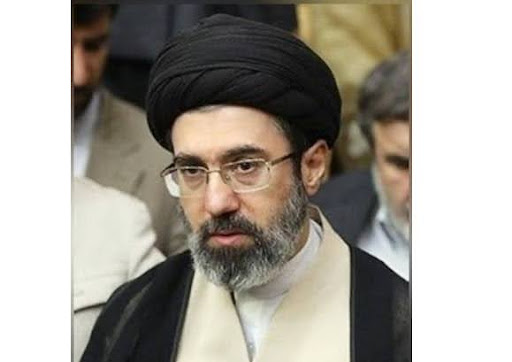
Picture Credit: Mahmoud Hosseini / Tasnim News Agency via Wikimedia Commons
14