
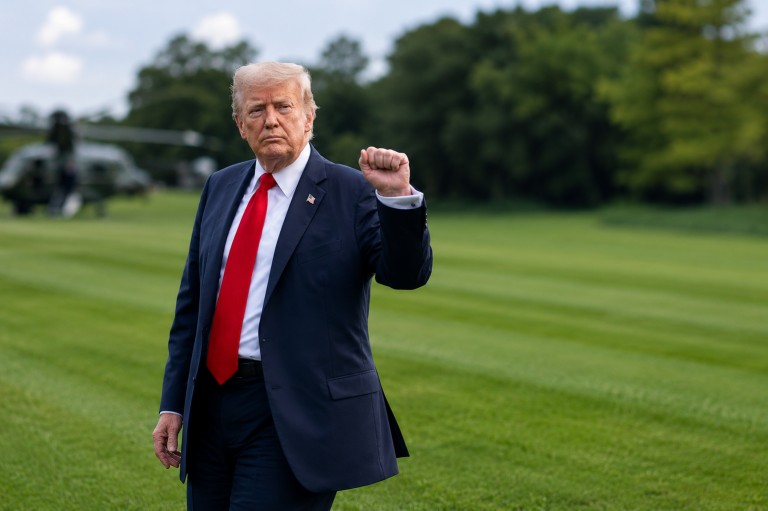
NATO allies and defense officials found themselves puzzled after former U.S. President Donald Trump revealed plans to dispatch an additional 5,000 American troops to Poland. This announcement came on the heels of a prior directive to reduce U.S. forces in Europe, which had already set off a wave of concern among NATO members regarding America’s enduring commitment to European security.
Earlier in the month, the U.S. administration confirmed intentions to withdraw approximately 5,000 troops from Europe. This included halting the rotation of thousands of military personnel into Poland from Germany, a decision that prompted NATO members to question the U.S.’s long-term strategic plans. In a surprising shift, Trump later indicated that the U.S. would, in fact, bolster its military presence in Poland, attributing the decision to robust relations with Polish President Karol Nawrocki.
This abrupt policy reversal caught both NATO allies and U.S. defense officials off guard, as they had already begun realigning military strategies following the initial withdrawal announcement. The uncertainty surrounding U.S. troop deployments has left several European leaders anxious, particularly as tensions with Russia persist due to the ongoing conflict in Ukraine.
U.S. Secretary of State Marco Rubio acknowledged that allies are aware of America’s broader review of its global military posture. He hinted that while troop levels in Europe are under consideration, a reduction could still be on the horizon. Currently, around 80,000 U.S. troops are stationed across Europe, and NATO continues to engage in discussions regarding future defense strategies and troop placements along its eastern flank.
NATO Secretary-General Mark Rutte stressed the importance of European nations enhancing their own security measures alongside U.S. support. As NATO navigates these changes, the alliance remains focused on ensuring stability and readiness amid the evolving geopolitical landscape.