
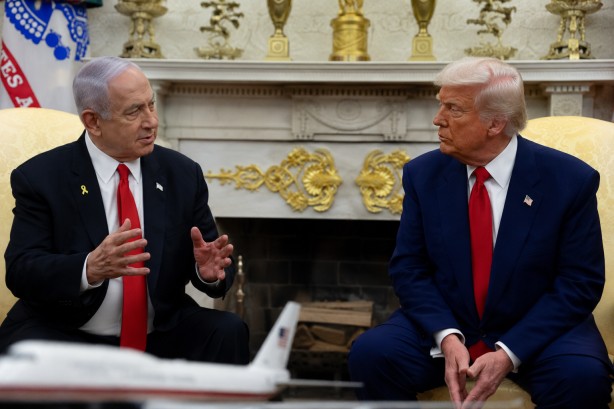
Israeli Prime Minister Benjamin Netanyahu and U.S. President Donald Trump recently convened at the White House for a detailed discussion primarily centered on Iran, regional security dynamics, and the trajectory of U.S.-Israel relations. The meeting saw the leaders deliberating over three potential strategies regarding Iran: negotiating a diplomatic accord, intensifying economic sanctions, or contemplating military measures. Rather than advocating for a singular path, the talks were characterized as an exploration of various options.
During the discussions, Netanyahu expressed skepticism about Iran’s commitment to any future agreements, though he stopped short of urging the United States to initiate new military actions. Both leaders concurred on the critical importance of preventing Iran from acquiring nuclear weapons, underscoring this as a mutual goal. The dialogue also touched on strategies to heighten economic pressure on Tehran, aiming to minimize disruptions to global energy markets. Netanyahu asserted that Iran should not be permitted to exploit the Strait of Hormuz as a negotiating tool.
Regional security concerns were also on the agenda, with Netanyahu detailing Israel’s military stance in Syria and southern Lebanon. He reportedly used maps to illustrate Israel’s security challenges, emphasizing the necessity of maintaining defensive positions to counter potential threats. Alongside military considerations, the conversation addressed the long-term framework of U.S.-Israel defense cooperation. Netanyahu proposed a gradual reduction in Israel’s dependency on American military assistance over the next decade, while advocating for an expansion in joint defense research and development initiatives.
Despite some reports suggesting friction between the two leaders, an Israeli official dismissed these claims, portraying the relationship as close and cooperative. The official emphasized that the discussions were part of ongoing regional policy dialogues, reflecting a strong partnership between the U.S. and Israel. The meeting underscored the shared commitment to addressing pressing security and diplomatic challenges in the region, while exploring avenues for future collaboration.