
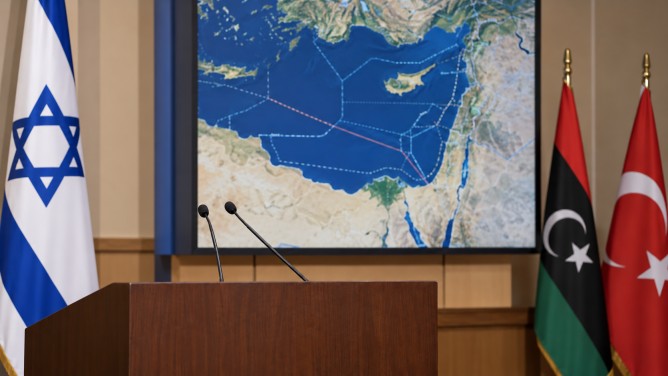
Israel has voiced strong objections to Libya’s eastern parliament’s decision to approve a maritime agreement with Türkiye, expressing concerns that the move could undermine the maritime rights of regional partners like Greece and Cyprus. The contentious deal involves maritime boundaries in the eastern Mediterranean, a region significant for its potential natural gas resources.
Greece, Cyprus, and Egypt have also opposed the agreement, arguing that it conflicts with their maritime claims. The European Union has questioned the agreement’s legal validity, emphasizing the importance of respecting the sovereign rights of its member states under international law. Israel’s Foreign Ministry criticized Türkiye for contributing to instability in the eastern Mediterranean, highlighting its close relations with Greece and Cyprus, amidst deteriorating relations between Israel and Türkiye, particularly over the conflict in Gaza.
Türkiye, on its part, has defended the agreement as being in line with international law and beneficial for both nations involved. Turkish Foreign Minister Hakan Fidan stated that the Libyan parliament’s approval merely formalized an arrangement that Türkiye already considered effective.
The approval of this agreement also highlights the fragmented political landscape within Libya. Eastern Libya, under the leadership of military commander Khalifa Haftar, has been in a longstanding rivalry with the internationally recognized government in Tripoli. Despite this, its relationship with Ankara has evolved positively in recent years.
Meanwhile, the European Union has reiterated the call for adherence to international maritime law and the respect for the sovereign rights of all member states. Greece has taken the matter to the United Nations, expressing concerns that the agreement could have implications for security and stability throughout the eastern Mediterranean region.