
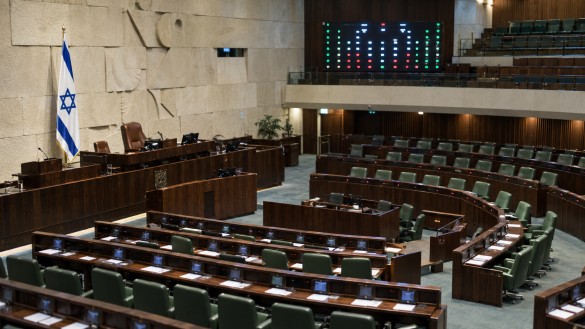
Israeli Prime Minister Benjamin Netanyahu is facing a challenging political landscape after the final election results left his coalition without a parliamentary majority. His bloc secured 53 seats in the 120-member Knesset, falling short of the 61 needed to form a government. Meanwhile, the Arab-led parties achieved a historic performance by winning 19 seats, positioning themselves as potential kingmakers in the formation of Israel’s next government.
The main opposition alliance, led by Gadi Eisenkot, garnered 48 seats. This configuration leaves both the Netanyahu bloc and the opposition without a clear path to governance, necessitating support from other political factions. Eisenkot and his allies may attempt to form an anti-Netanyahu coalition, which could include the Arab-led parties, potentially reaching a majority of 67 seats. However, this possibility faces resistance from right-wing politicians and voters.
The increasing political influence of Arab citizens, who make up about 20% of Israel’s population, is underscored by strong voter turnout and opposition to Netanyahu’s far-right allies. Nonetheless, Netanyahu has criticized the prospect of an opposition government that relies on Arab parties, citing concerns over national security.
Another scenario under consideration is a national unity government involving both Netanyahu and opposition politicians. However, opposition leaders have expressed reluctance to serve under Netanyahu, blaming him for security failures related to the October 7, 2023, Hamas attack and voicing concerns over his ongoing corruption trial.
Adding to the political uncertainty are allegations of foreign interference in the election. Israeli election authorities have called for an investigation by the Shin Bet security agency after receiving claims of irregularities, though Qatar has denied any involvement. Election officials have emphasized that such claims should not undermine the legitimacy of the election results or the Arab voters.
If coalition negotiations remain deadlocked, Israel could face another election early next year, with Netanyahu’s administration continuing in a caretaker role. The final election results are expected to be submitted to President Isaac Herzog, who will then choose a candidate to form the next government. The new Knesset is set to convene on November 10, leaving the future political direction of Israel uncertain until a coalition can be agreed upon.