
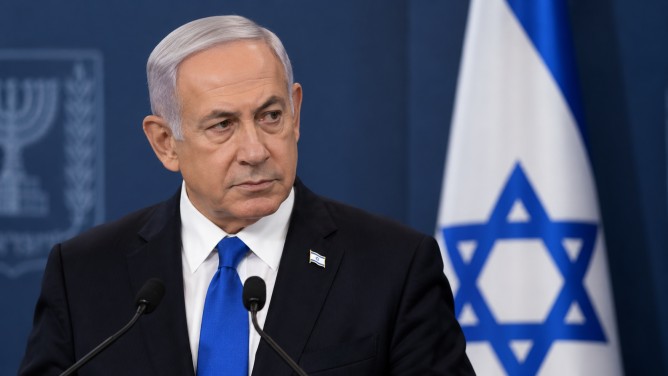
A recent television poll from Israel indicates a deadlock between Prime Minister Benjamin Netanyahu’s bloc and opposition parties, each securing 53 seats. Meanwhile, Arab parties are expected to claim 14 seats, leaving both sides short of the 61 seats required for a Knesset majority.
This outcome represents a notable shift from the previous poll, where the opposition led with a 57-48 advantage. The change is largely due to the emergence of two right-wing parties in the projected Knesset lineup: Ofer Winter’s People of Israel with four seats, and the Religious Zionism-Zehut alliance, which is predicted to secure six seats.
Netanyahu’s Likud party has also managed to close the gap with the opposition frontrunner, Yashar, led by Gadi Eisenkot. Yashar is now projected to win 22 seats, while Likud is close behind with 21 seats. Additionally, the predominantly Arab Joint List has increased its support, now expected to obtain nine seats.
In contrast, the B’Yachad alliance, under the leadership of Naftali Bennett and Yair Lapid, has seen a decline, dropping to 12 seats. Several other parties, including Unity, Blue and White, and Zionist Home-The Reservists, are predicted to fall short of the electoral threshold needed for Knesset entry.
The poll, conducted among 940 respondents, carries a margin of error of 3.4%, reflecting the dynamic and uncertain nature of Israel’s political landscape as parties vie for influence and control.