
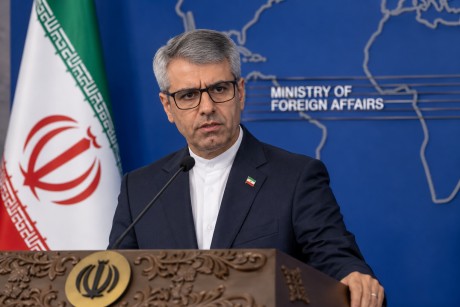
Iran has firmly denied any involvement in the conflict currently unfolding in Yemen, asserting that the Houthi forces operate independently and make decisions autonomously. According to Iranian Foreign Ministry spokesman Esmaeil Baghaei, Tehran does not interfere in the internal affairs of Yemen. He dismissed allegations that Iran is linked to the recent developments concerning Saudi Arabia and Yemen, emphasizing that the roots of the conflict are deeply entrenched within Yemen itself.
In a related development, Baghaei confirmed that a meeting initially planned to take place in Oman, involving Iran and other Gulf countries, has been postponed at the request of Saudi Arabia. This meeting was intended to focus on regional security and cooperation. Despite the delay, Baghaei stated that Iran and Oman have successfully finalized an understanding regarding maritime routes in the strategic Strait of Hormuz. The two nations are expected to determine the next steps moving forward with this agreement.
Oman’s Foreign Minister Badr Albusaidi commented on the postponement of the regional meeting, suggesting that it was delayed to foster a consensus among involved parties. Nevertheless, he reaffirmed Oman’s commitment to ongoing dialogue, regional stability, and long-term cooperation, highlighting the nation’s dedication to these principles despite the current postponement.
The discussions in Oman were also seen as an opportunity for Iran and Oman to present their mutual understanding concerning the Strait of Hormuz. While the specific timeline for rescheduling the postponed meeting remains uncertain, both countries have agreed on the terms of their collaboration regarding maritime routes in the region.
The situation underscores the complex geopolitical dynamics in the Gulf, where regional security, cooperation, and internal conflicts continue to be subjects of significant international focus. As Iran distances itself from the Yemeni conflict, the postponed dialogue in Oman reflects the ongoing efforts to address broader regional challenges and foster stability in the Middle East.