
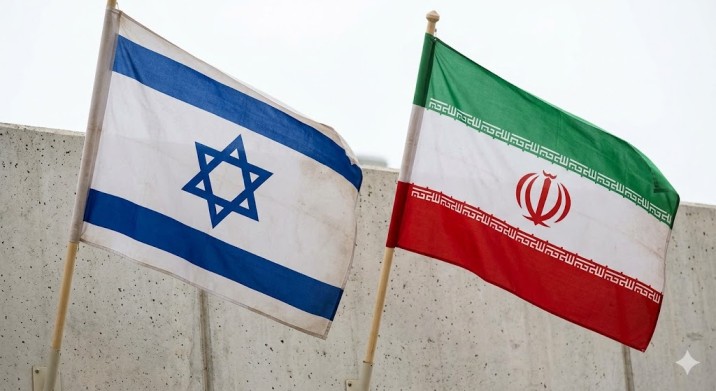
Israel and Iran have engaged in new military exchanges, threatening the fragile ceasefire that has been in place since April 8, and raising fears of a broader conflict in the Middle East. The skirmish began when Iran fired missiles toward northern Israel, prompting the Israeli military to respond with airstrikes on various Iranian sites. This marks the first direct confrontation between the two nations since the ceasefire was established.
According to Iranian reports, explosions were felt in cities such as Tehran, Isfahan, Karaj, and Tabriz. The Israeli forces stated that their attacks targeted military infrastructure and air defense systems, including a petrochemical facility. Meanwhile, Iran’s Islamic Revolutionary Guard Corps (IRGC) claimed responsibility for missile attacks on two Israeli military bases under an operation dubbed “Operation Nasr” or “Victory.” While Israel reported successful interception of several incoming missiles, explosions were heard near Jerusalem, and damage was noted in a West Bank settlement, although no injuries were reported.
The escalation coincides with ongoing efforts to secure a broader peace agreement, with Iranian officials accusing the United States of either being complicit in or supporting Israel’s actions. They warned that these attacks might jeopardize current diplomatic negotiations. Concurrently, Yemen’s Houthi movement declared a missile attack against Israel and announced a ban on Israeli-linked shipping in the Red Sea, threatening to disrupt a crucial global trade route.
This uptick in violence has also had immediate effects on global markets. Brent crude oil prices increased by $3.50, reaching $96.59 per barrel, as concerns over potential disruptions to energy supplies and regional stability loom. Stock markets across Asia have reacted negatively, reflecting growing anxiety about the potential for an extended conflict in the region.